What are Biomass Briquettes?
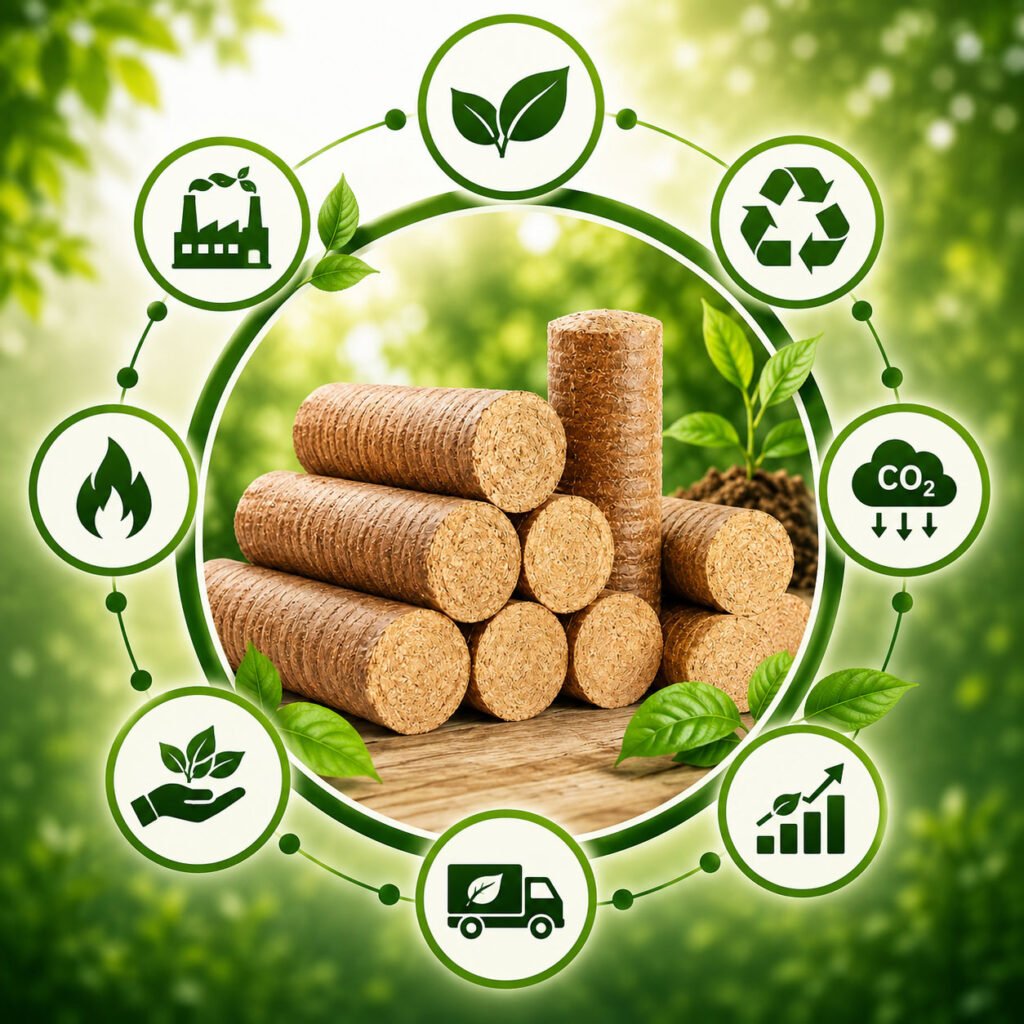
Biomass Briquettes are compressed blocks of organic biomass materials produced under high pressure without the use of harmful chemical binders. These briquettes are manufactured from renewable resources such as wood waste, rice husk, sawdust, agricultural residues, coconut shells, sugarcane bagasse, and other organic materials.
The briquetting process converts low-density biomass waste into a dense, high-energy fuel source that burns efficiently and consistently while producing significantly lower emissions than traditional fossil fuels.
Why Biomass Briquettes?
The increasing demand for sustainable energy has encouraged industries to move away from conventional fossil fuels. Biomass briquettes offer numerous advantages:
Renewable and sustainable fuel source
Lower carbon footprint
Reduced greenhouse gas emissions
High calorific value
Low moisture content
Low ash generation
Cost-effective industrial fuel
Easy storage and transportation
Supports waste recycling and circular economy initiatives
By utilizing agricultural and forestry waste materials, biomass briquettes help reduce landfill dependency while creating valuable energy resources.
How Dynamic Biomass Technology Works
Dynamic Biomass Technology utilizes advanced briquetting systems to convert biomass waste into high-density fuel briquettes.
The production process generally includes:
Collection of Biomass Raw Materials
Organic waste materials such as:
Sawdust
Wood chips
Rice husk
Coconut shells
Sugarcane bagasse
Agricultural residues
Forestry waste
are collected and prepared for processing.
Drying Process
The raw materials are dried to achieve the optimal moisture content required for efficient briquette production and combustion performance.
Size Reduction
The biomass materials are processed and ground into uniform particle sizes to ensure consistent briquette quality.
Briquetting Process
The prepared biomass is compressed under high pressure through specialized briquetting machines. During this process, natural lignin present in the biomass acts as a binding agent, eliminating the need for chemical additives.
Final Product
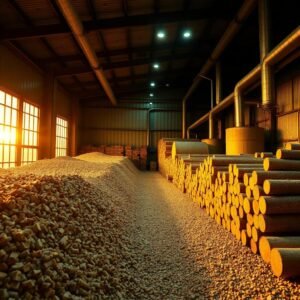
The finished briquettes are durable, energy-dense fuel products suitable for industrial and commercial applications.
Applications of Biomass Briquettes
Dynamic Biomass Briquettes are widely used across various sectors:
Industrial Boilers
Biomass briquettes provide a stable and efficient heat source for steam generation and industrial processing.
Power Generation
They are increasingly used in biomass power plants as a renewable fuel source for electricity generation.
Textile Industries
Textile factories utilize biomass briquettes for boiler operations and thermal energy requirements.
Food Processing Industries
Food manufacturing facilities use briquettes for process heating and steam production.
Brick Manufacturing
Biomass briquettes serve as an alternative fuel in brick kilns, helping reduce dependence on coal.
Commercial Heating Systems
Hotels, restaurants, and commercial facilities benefit from clean-burning biomass fuel systems.
Environmental Benefits
One of the most significant advantages of biomass briquettes is their positive environmental impact.
By converting agricultural and organic waste into useful fuel, biomass briquettes:
Reduce open-field burning of agricultural waste
Minimize landfill accumulation
Lower greenhouse gas emissions
Reduce dependence on fossil fuels
Promote sustainable waste management
Support renewable energy development
As biomass materials naturally absorb carbon dioxide during growth, the overall carbon cycle remains significantly more balanced than conventional fossil fuel usage.
Contribution to the Circular Economy
Dynamic Biomass Technology supports the principles of a circular economy by transforming waste materials into valuable energy resources.
Agricultural and forestry residues that would otherwise be discarded become productive fuel sources, generating economic value while reducing environmental impact.
This approach creates benefits for:
Building a Greener Future
As global demand for sustainable energy continues to rise, biomass briquettes are becoming an increasingly important component of the renewable energy landscape.
Dynamic Biomass Technology is dedicated to delivering reliable, high-performance biomass fuel solutions that help industries reduce costs, improve sustainability, and contribute to a cleaner environment.
By converting waste into energy, we are creating practical pathways toward a greener, more sustainable future for generations to come.